Monday, 2 May 2011

2011 BMW X1

2011 BMW X1

2011 BMW X1

BMW is an expert at filling niches that buyers probably never even thought existed. Witness vehicles such as the 5-series Gran Turismo, the upcoming Mini SUV, and the smallest member of the X family, the X1.
This new BMW baby ute is 175.4 inches long, 70.8 inches wide, and 60.8 inches high. That makes it 2.8 inches shorter than a 3-series wagon and 4.5 inches shorter than an X3. Although this may suggest it’s based on the 1-series, the X1 is actually closely related to the 3-series wagon, down to axles, powertrains, and identical all-wheel-drive systems.
The X1 is not a serious off-roader—there are no differential locks, for instance. It’s more of an on-road driving machine with forest-exploration capability. In everyday driving, the AWD system delivers 60 percent of the engine torque to the rear axle and 40 percent to the front, but the multidisc clutch pack is able to apportion torque to whichever axle needs it for traction.
At a glance, the X1 looks very similar to the bigger X3. The main differentiation is its giant BMW kidney grille and more steeply raked windshield and liftgate. Inside, the X1’s décor and layout mimic those of the 3-series. Surprisingly, in view of the vehicle’s compact dimensions, there’s plenty of room out back for a couple of adults. The fifth passenger’s space is compromised by the way the center console runs back into that rider’s seating area. The cargo area varies between 15 cubic feet with the rear seats slid all the way back—there’s another 3 cubic feet available if they’re slid forward—to 48 cubic feet with the seats folded flat.
When the car goes on sale in the U.S. in early 2011, the initial model offering will be the X1 xDrive30i, powered by a 260-hp version of BMW’s familiar 3.0-liter inline-six also found in the X3 and the X5. A 2.0-liter, four-cylinder twin-turbo diesel may or may not make it to these shores. In Europe, the inline-six is mated only to a six-speed automatic transmission.
The X1 definitely wants to be the sports car in the compact-SUV segment. The Servo­tronic steering system is tuned comparably to the 3-series’ helm and feels much more responsive than the X3’s. The optional Sport package lowers the ride height by 0.8 inch and comes with 18-inch wheels and tires in place of the standard 17-inchers. Despite this, it’s more comfortable than the X3 and exhibits better body control in taking corners. Harsh impacts cause fewer tremors than in the X3.
Exactly what the X1’s niche is, though, we’re not quite sure: the sporty member of the really small and expensive cute-ute category, perhaps? When it goes on sale, it will be in a class of three, joined by the Land Rover LRX and the Audi Q3, and it will likely start at about $36,000.
2011 BMW X1
2011 BMW X1
2011 BMW X1

Monday, 25 April 2011

2012 Toyota Prius v


2012 Toyota Prius v
2012 Toyota Prius v
Meet the new Prius v, a five-passenger midsize hybrid that gets an EPA estimated 42 mpg city and 38 mpg highway and spearheads Toyota's expansion of the Prius line from a single vehicle to the industry's first all hybrid-electric brand.
Toyota announced the expansion of the Prius into a full family of vehicles at its booth today at the 2011 North American International Auto Show (NAIAS), with the Prius v leading the charge. In addition, Toyota revealed the Prius c, a smaller, lower cost hybrid meant for urban running. Toyota claims the c will "will appeal to young singles and couples who want an eco-sensitive, high-mileage, fun-to-drive Prius" but we think the company has its sights set on Honda's recently announced Fit Hybrid. Rounding out the Prius family plans, Toyota provided an update on the status of its Prius Plug-in hybrid-electric vehicle program -- which has been operating on a test basis in several U.S cities. The company says it will begin selling the lithium-ion powered Prius Plug-ins in 14 states, starting in the first half of 2012. With the Plug-in variant set for production, the Prius family grows to four vehicles: Prius, Prius Plug-in, Prius v and Prius c.
2012 Toyota Prius V Front Three Quarter In Motion
Of these, the Prius v is the most intriguing as it is set to go on sale by the end of this summer. Though it shares the Prius' Hybrid Synergy Drive hybrid-electric powertrain, Toyota claims the v "is a new vehicle designed from the ground up, with a shape that evolved from Prius rather than being an elongated version." The family resemblance is obvious - Toyota is no doubt banking on the recognition and appeal of the regular Prius, which has sold some 955,000 copies in the U.S. since its introduction in 2000.

Like the current generation Prius, the Prius v is a showcase of the latest Toyota technology -- mostly notably Toyota's new Entune multimedia system. This new infotainment system uses mobile phone technology to deliver all of the content and services consumers expect on the latest smartphones, including one today's biggest buzzwords -- mobile applications. Microsofts' Bing search engine, OpenTable, and movietickets.com are just three of the notable apps listed as available one Entune, along with Pandora and iheartradio on the web-based music front. Entune also offers a laundry list of features including navigation with live weather, traffic, and news updates, a gas station locator, satellite radio, Bluetooth audio streaming and hands free phone operation, a text message read/reply service, and support for portable media player, such as iPod.
2012 Toyota Prius V Cockpit
For the rest of the driving experience, the v offers a futuristic cockpit, with single-dial air-conditioning control and a center-mounted digital information display. As with the Prius, four driving modes are available -- Normal, Power, Eco and EV. Standard features include a keyless entry system with push button start, electronic shift lever, Hill Start Assist Control (HAC), and back-up camera. LED headlamps, Dynamic Radar Cruise Control with a Pre-Collision System (PCS), and Advanced Parking Guidance System -- the party trick that lets the Prius park itself -- are all options.
2012 Toyota Prius V Interior Seats
On the safety front, Prius v comes with seven airbags and new driver and front-passenger seat design that Toyota claims helps lessen possible whiplash injury during a collision. Also standard are Vehicle Stability Control (VSC), Traction Control (TRAC), Anti- lock Braking System (ABS), Electronic Brake-force Distribution (EBD) and Brake Assist. As a result of recent safety woes, the Prius also comes standard with Toyota's Smart Stop Technology brake-override system.
So don't worry, the Prius v is safe. In fact, it is a safe, conservative step from the company synonymous with risk aversion. But though it surprises nobody that Prius is becoming its only family of cars, you can bet that competitors worldwide are already furiously working on strategies to take on Toyota's rapidly expanding hybrid juggernaut.

2012 Toyota Prius v

2012 Toyota Prius v

2012 Toyota Prius v

2012 Toyota Prius v

2012 Toyota Prius v

2012 Toyota Prius v
2012 Toyota Prius v

2012 Mercedes-Benz C-Class


2012 Mercedes-Benz C-Class
Mercedes has officially announced the addition of a biturbo direct-injection inline-four-cylinder engine to its lineup that will supply the C250 with 201 horsepower and 229 pound-feet of torque in the entry-level Benz. A 228-horspower, 221-pound-foot V-6 will be in the C300 4matic and the range topping C350 will get a new 300-horspower, 273-pound-foot, direct-injection V6.
Along with the new engines, the 2012 C-Class will receive a high-resolution full color display in the instrument panel, along with a host of driver assistance features including; drowsiness assist, park assist, adaptive high-beam assist, lane keep assist and blind spot assist. No word yet on if Mercedes will offer an assist-assist to help drivers manage all of this added assistance.
2012 Mercedes Benz C Class Rear Three Quarters
The 2012 Mercedes-Benz C-Class is headed to the 2011 Detroit Auto Show for its public debut, but before that happens and thanks to a broken embargo in Europe, we've got photos of the new C-Class ahead of its official reveal.
Changes to the exterior of the car are extremely minor, limited almost entirely to the front and rear fascias. The front fascia receives a new headlight treatment, with a two-tiered design nearly identical to those seen on the new CL. The grille is slightly reshaped as are the lower air intakes, the fenders flares look to have been reduced, and the rear bumper is slightly lower. New, modern wheels complete the exterior revisions.
2012 Mercedes Benz C Class Front Three Quarters
The interior of the 2012 C-Class is an entirely different story as it has been thoroughly redesigned. It now features the same angular design theme being applied across Mercedes' lineup and now found in the S-, CLS-, E-, and CL-Classes. The new C-Class features inverted vents compared to the rest of the lineup. The big news though is that the navigation unit is no longer a pop-up unit, but is rather built right into the dash and nestled under a sun-shielding hood.
2012 Mercedes Benz C Class Front Three Quarters 4
Mercedes also updated the center console with modern aluminum-look controls. The same aluminum-look is used for new, 3-D surrounds on the instrument cluster rather than the simple, 2-D surrounds on the outgoing car. The steering wheel and its controls have also been updated, and dare we say it, actually look like a more upscale version of those found on a 2011 Volkswagen GTI. New, classy trim accents complete the changes to the 2012 C-Class' interior.
As for powertrains, details on the U.S.-spec car have yet to be released, but expect very few changes apart from direct-injection for the basic C-Class models. The outrageous C63 AMG however, is likely to get Mercedes' new twin-turbocharged, direct-injected, 5.5-liter V-8 that's currently finding its way into all "-63" badged AMG models. We'll know exact U.S.-powertrain specifications shortly.
Stick with us as we approach the public unveiling of the 2012 Mercedes-Benz C-Class at the 2010 Detroit auto show
2012 Mercedes-Benz C-Class

2012 Mercedes-Benz C-Class

2012 Mercedes-Benz C-Class

2012 Mercedes-Benz C-Class

2012 Mercedes-Benz C-Class

2012 Mercedes-Benz C-Class

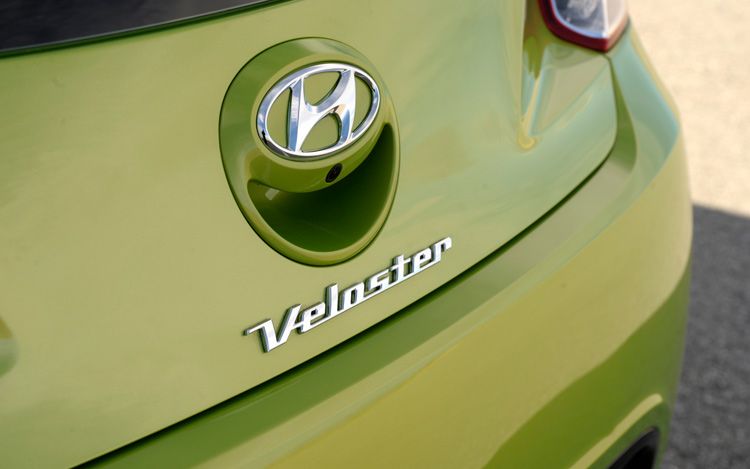
2012 Hyundai Veloster


2012 Hyundai Veloster
Before the Genesis Coupe, there was the Tiburon. Hyundai's former entry-level sport coupe didn't make a lasting impression here in the U.S., but the Korean automaker is ready to try again with its all-new 2012 Hyundai Veloster. Like the Tiburon was, the Veloster is front drive, compact and sportyish, but the new car features a few significant differences.
We've kept a diligent eye on the Veloster since it first appeared at the 2007 Los Angeles show, back when it was just a wide-eyed concept from a then-marginal brand not yet known for turning out compelling vehicles. A little more than three years later, with the automaker enjoying white-hot brand visibility and record sales here in the U.S., Hyundai has decided the Veloster's time is now.
Unlike the Tiburon, the Veloster doesn't fit the classic definition of a coupe, despite Hyundai's marketing spin. Though it has a coupe-like outline, the Veloster is a hatchback. In addition, there's a forward-hinged third door on the passenger side of the vehicle with a recessed handle for a smooth, clean look.
Hyundai drew inspiration from sportbikes for the Veloster's body. The A-pillars are blacked out and elements of Hyundai's "Fluidic Sculpture" design language are manifested throughout the sheetmetal. Up front, the brand's trademark hexagonal grille complements the gaping mouth, with wraparound headlights and sculpted air inlets massaged into the fascia's edges. It's no roadster, but the optional panoramic sunroof will let in the elements.
2012 Hyundai Veloster Front Three Quarters
Like most high-performance sportbikes, the Veloster comes with 17-inch rims standard, with 18-inchers available. Hyundai will also offer a special 18-inch alloy wheel with painted inserts, a feature the automaker is billing as a segment first. Whatever the wheel dimensions, they'll work in concert with a MacPherson strut front and torsion-beam rear suspension with an integrated anti-roll bar.
To really connect with the youth of America, Hyundai is giving every Veloster a multifunction, 7-inch touch-screen display (navigation optional). Blue Link, the automaker's newly announced in-car telematics/connectivity system, will be heavily promoted. Two sound systems will be on the order list: a 196-watt, six-speaker getup with iPod/USB/auxiliary inputs, and the optional 450-watt, eight-speaker system with 8-inch subwoofer and external amplifier. Video game enthusiasts will delight in the integrated RCA jack and 115-volt power outlet, though they'd better steer clear of any split-screen action.
Hyundai is especially proud of the Veloster's interior volume. At 105.3 total cubic feet, including passenger and cargo space, it bests the Honda CR-Z and both the Mini Cooper and Clubman. Headroom, legroom, and shoulder room within the four-seater's confines were all maximized, because as Hyundai is well aware, most coupes and hatchbacks are panned for having cramped cabins.

The concept housed a Theta 2.0-liter four-cylinder as the engine placeholder, but the production model will brandish a version of Hyundai's new Gamma 1.6-liter inline-four. The Gamma employs a highly pressurized fuel delivery system and dual continuously variable valve timing to help deliver an estimated 30 city and 40 highway mpg - besting the CR-Z's hybrid-boosted numbers on the highway. Maximum power output is pegged at 138 horsepower at 6300 rpm and 123 pound-feet of torque at 4850 rpm.
Like the old Tiburon, a true manual transmission is available for the three-pedal faithful. For those unable or unwilling to manually swap the six forward cogs, the Veloster is equipped with the automaker's all-new, in-house-developed six-speed dual-clutch automatic. As with similar setups, one clutch is responsible for the odd-numbered gears, the other for the even-numbered ratios (and reverse). To reduce parasitic driveline loss, the auto uses electric motors to actuate the gear changes. Hyundai says its dual-clutcher yields a 5- to 6-percent fuel efficiency improvement and 3- to 7-percent gain in acceleration over a conventional auto.
An Active Eco mode, selectable by the driver, will alter engine and transmission settings to achieve a 7-percent increase in real-world fuel economy.
2012 Hyundai Veloster Rear Three Quarters
For those hoping the Veloster has a little more oomph under the hood, help may already be on the horizon for the unreleased hatchback. Hyundai's Curb concept, also shown at the Detroit show, found extra motivation by way of a turbocharger, and the same Gamma 1.6-liter gets a healthy bump to 175 horsepower and 169 pound-feet of torque. Not astronomical by any means, but given the Veloster's relatively svelte curb weight (it tops out at roughly 2700 pounds), we're guessing a turbocharged version would amp up the car's sport quotient.
Hyundai's target market for the Veloster is Gen Y, although whether those 20-somethings will regard it as a legitimate contender remains to be seen. And there's little doubt the Veloster's sheetmetal will draw more than its share of critics (see the comments section below). Of course, we'll reserve judgment until we can drive and test it, but one thing's for sure -- Hyundai's relentless drive to re-invent itself is showing no signs of slowing down.


2012 Hyundai Veloster

2013 Ford Focus Electric

2013 Ford Focus Electric
My initial reaction wasn't, "Hey! Electric Ford Focus." My initial reaction was, "Aston Martin wants its grille back." The 2013 Focus Electric looks like a larger, better-designed version of the Aston Martin Cygnet, the little Toyota-built dinghy for Aston owners who live in or regularly visit London.
Of course, Ford Motor Company still owned Aston Martin when Martin Smith's European studio began designing this car. In fact, the wide maw Aston-like grille first appeared on a Ford when the Verve concept foreshadowed the current Fiesta subcompact at the 2007 Frankfurt motor show.
It's the kind of design detail the ever more style-conscious Ford can more easily pull off when the grille doesn't need to suck in any air. The company is making some big claims about the first "fuel-free, rechargeable passenger car from Ford" (the electric Transit Connect is its first such truck), but isn't revealing much about the nature of the powerpack. It's an all-electric powertrain with a single-speed transmission. Battery system is an advanced lithium-ion unit Ford has developed with supplier LG Chem that uses heated and cooled liquid to maximize battery life and driving range. Ford handles thermal management with liquid heating in cold weather, liquid cooling when it's hot.
Ford claims a 100-mile range. It fully recharges in three to four hours at 240 volts, half the charging time of the Nissan Leaf and with twice the mpg equivalent of the Chevrolet Volt. Its dedicated charging system will cost consumers $500 to $700 less than Nissan's or Chevy's, Ford claims. Top speed is 84 mph.
The charge port, between the driver's door and front wheel well, activates a light ring that loops around the port two times to let the owner know the car is connected. There's the usual gee-whiz recharging and battery-draining bar graph drama going on in the instrument panel, as well.
In going with the theory that both the environmentally correct and the anti-import oil crowd also make up the exclusive group of Americans who like hatchbacks (Chevy Volt, Toyota Prius, Nissan Leaf), the Focus Electric will be available only in the four-door hatchback bodystyle, not the four-door sedan.

Bill Gates may want one. As an offshoot of Ford's Sync partnership with Microsoft, the software company will supply a "value charging" feature that helps find the lowest off-peak rates for recharging.
Sync and the related MyFord Mobile app accommodates a full range of connectivity, of course, including the now-requisite smartphone connection, which allows the Focus Electric owner to check the car's status, operate key functions remotely, check the car's charge level and driving range, remotely program charge settings and download data, and get alerts when the car needs a recharge or when it has finished charging.
There's also WiFi, Sirius and HD radio.
2013 Ford Focus Electric Rear Three Quarters Passenger
 Click to view Gallery
It may be a Ford, but you don't need to order black paint. Ford promises an upscale C-segment car, much like the new, gas-powered '12 Focus that's about to hit showrooms. Standard safety includes six airbags, electronic traction control, hands-free Sync and MyKey keyless entry in North America. Also standard are MyFord Touch driver connectivity, 15-spoke 17-inch aluminum wheels, a 60/40-split rear bench seat, push-button start, AM/FM/HD/Sirius/CD/MP3 nine-speaker Sony Audio with Travel Link and voice-activated navigation. Don't be surprised to see a sticker price somewhere between the Leaf's $33,000 and the Volt's $41,000 (both before tax credits), with well-equipped versions tilting closer to Volt than to Leaf.
The Focus Electric is a pretty safe gamble for Ford, even if gasoline breaches $4 per gallon before the car's late-'11 launch. It's part of One Ford's huge effort to tackle the world's largest automotive segment, the C-car, with myriad bodystyles, drivetrains and fuel types off one basic platform. The Focus Electric will be sold in other markets, including western Europe. All North American-market electrics will be assembled in Ford's newly revitalized Michigan Assembly Plant in Wayne, just outside Dearborn, a former body-on-frame truck factory that will produce other versions of the Focus, the C-Max multipurpose vehicle, and probably the Escape replacement.
The scope and flexibility of the Wayne Assembly Plant lets Ford adjust production higher for more popular models, and lower for models that don't do as well as expected. Just in case, you know, Ford customers don't want a Focus with an Aston grille.


2013 Ford Focus Electric